


Guizhou Keeps Getting More Popular: Why First-Time Visitors Should Skip a Few Stops
A personal view of why Guizhou attracts travelers, and why first-time visitors may enjoy it more by choosing fewer stops and leaving room for weather, local life and the mountains.
Evidence 8 cited sources
On this page
If you ask why Guizhou travel is so popular, I do not think “because it is cooler in summer” is a complete answer. The weather gets people to look at Guizhou, but what makes many of them stay longer is the way cities, mountains, food, outdoor routes and very different landscapes sit close enough to be part of the same trip.
The current demand is visible in transport as well. On July 14, 2026, Guiyang Longdongbao International Airport handled 83,959 passengers and 567 flight movements in a single day, both record highs. In the first two weeks of July, passenger throughput exceeded one million. At the same time, Guizhou’s official summer products were being presented not only around famous scenic areas, but around cool-climate travel, outdoor sports, ethnic culture and longer stays.
That makes it tempting to build the most “complete” first trip possible. I would do the opposite.
If this is your first time in Guizhou, I would rather see you skip a few places than turn the province into a seven-day collection of names.
Why Guizhou works in summer—and why temperature is only the first layer
Cooler summer weather is the obvious advantage. High elevation, forest cover and karst terrain create many areas that feel far more comfortable than lower, hotter parts of China during the same weeks. Guizhou’s 2026 summer tourism promotion highlighted a provincial average summer temperature of about 23°C and forest coverage of 63.3%.
But climate alone does not explain the strength of the travel market. Air and rail access have improved, scenic-area booking systems are more mature, smaller group products are easier to arrange, and cities are putting more effort into night-time activities, outdoor sports and longer-stay travel.
Guiyang is a good example of why the province should not be understood as a string of scenic-area gates. Jiaxiu Pavilion, the Nanming River and the older parts of the city show one side of Guizhou; move outward and mountain roads and outdoor space appear quickly. Go farther to Xingyi and the scale changes again with Wanfenglin, Maling River Canyon and Wanfeng Lake.
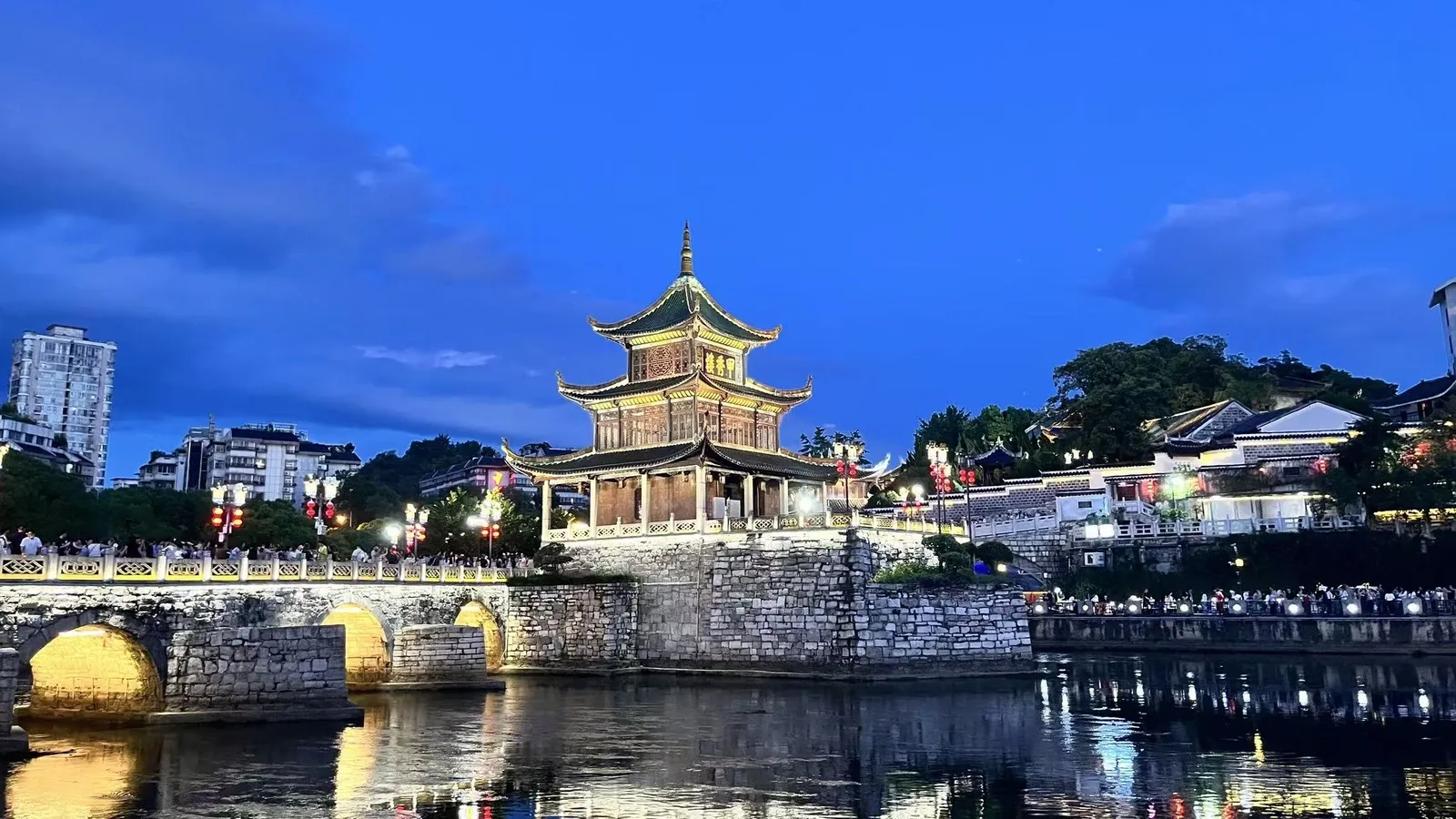
That short distance between ordinary city life and mountain landscapes is one reason I think Guizhou is becoming easier to stay in, not just easier to visit.
The more interesting change is that the province itself is starting to think beyond “how many scenic areas can one visitor enter?” Official tourism and development documents now talk explicitly about deeper travel and longer stays. That is a much harder product to build. A place that sells one ticket only needs a famous attraction; a place that expects someone to stay for a week needs food, transport, medical services, places to walk at night, tolerable bad-weather days and enough surrounding variety to keep daily life from feeling repetitive.
The most valuable thing here is not attraction density
First-time planning usually starts the same way.
Huangguoshu? Of course.
Xiaoqikong? Everyone says it is beautiful, so add it.
Xijiang? If you are already in Guizhou, surely you should see a Miao village.
Fanjing Mountain? It is a World Heritage site, so that goes on the list too.
Then the map opens again and Xingyi, Wanfenglin, Liupanshui, Zhenyuan and Zhaoxing begin to look impossible to leave out.
The resulting itinerary is impressively complete. It is also the kind of schedule that begins before breakfast, ends late at another hotel, opens and closes a suitcase every day, and leaves you remembering coach seats, parking lots and hotel lobbies more clearly than the mountains.
I have worked in software for years, and one habit has carried over into travel: when I look at a system, I first think about capacity, dependencies and failure tolerance. I do not start by adding more features.
Travel works the same way.
If an itinerary requires three timed stops every day with no buffer, one traffic jam, one weather change or one temporary restriction can push the rest of the plan out of shape.
When a system is scheduled to full capacity, its tolerance for failure approaches zero.
Guizhou is a particularly poor place to ignore that. Huangguoshu, Xiaoqikong, Xijiang and Fanjing Mountain may all sit inside one province, but they point in very different directions. Weather matters as much as distance: rain the night before, fog the next morning, strong wind in the mountains or a sudden storm can change what is worth doing that day.
If there is no empty space in the plan, the variability that makes Guizhou interesting becomes a problem instead of part of the trip.
Stay in one place for a few days and the “must-see list” starts to matter less
I felt this clearly after staying in Xingyi for a few days.
Wanfenglin, Maling River Canyon and Wanfeng Lake are all attractions, but what made Xingyi comfortable for me was not completing all three. It was staying in one base, not moving luggage every morning, going out when I wanted to, taking a break in the middle of the day and choosing another direction later if the weather and energy level still made sense.
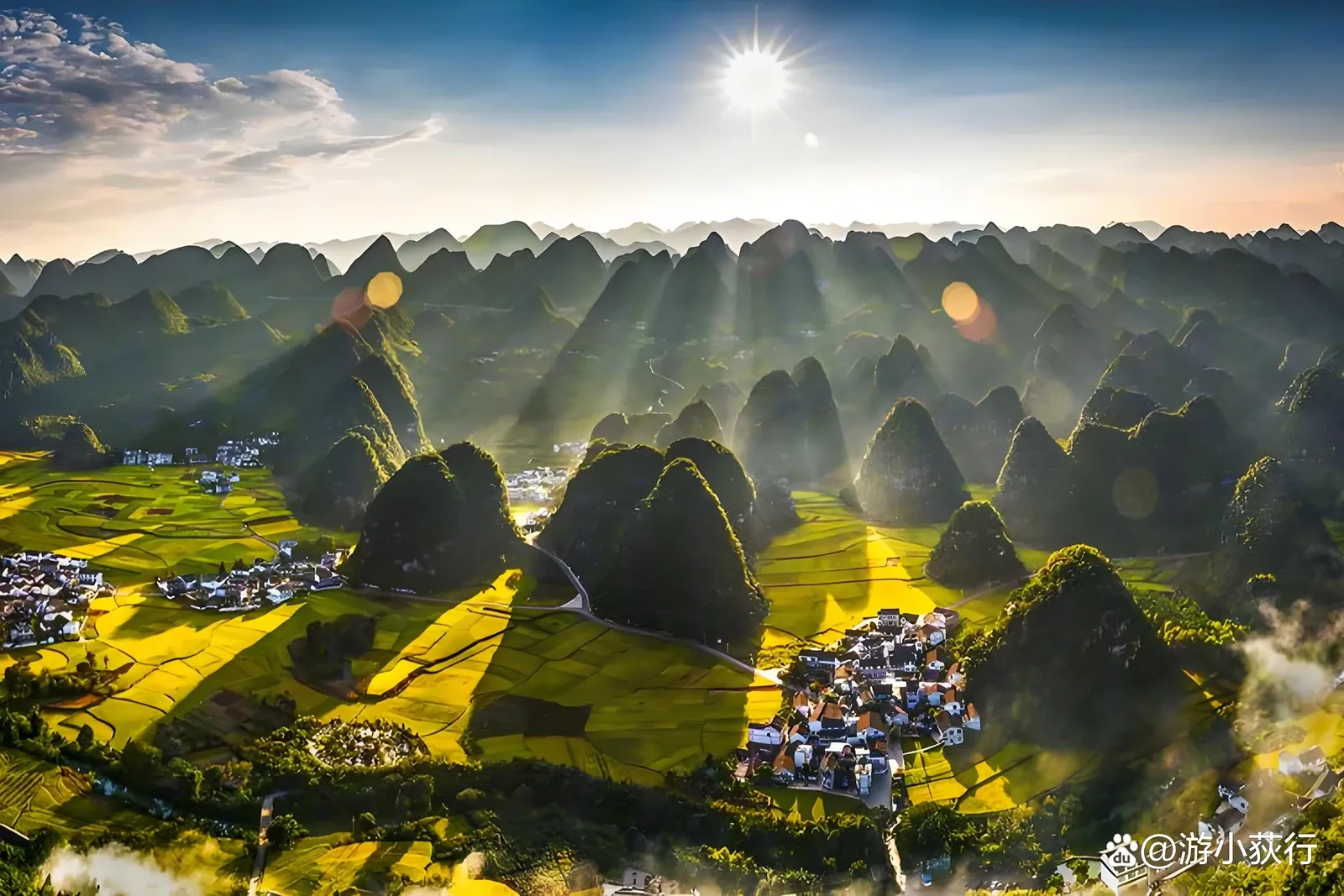
Wanfenglin rewards a slower look. Maling River Canyon is wetter, narrower and more physical. Wanfeng Lake opens the view again. They do not become better because they are compressed into morning and afternoon slots.
I wrote a separate Xingyi summer travel guide for that reason. The useful question is not how many places can fit into one day, but why Xingyi works better when it is allowed to become a temporary base.
Weining gave me a different version of the same lesson. When I went hiking and birdwatching around Caohai, what stayed with me was the wind, high plateau, wetland and changing weather—not a particular “must-photograph” position. Potatoes and a lamb hot pot are also easier to remember than a scenic-area map. Weining has real costs: elevation, sun exposure, wind and distance. Those costs are exactly what make it a different experience from Guiyang, Xingyi or Liupanshui.
The difference is the point.
Within one province, the rhythm can change from city to canyon, plateau to wetland, night market to mountain road, and one local meal to a completely different regional food culture.
First decide which version of Guizhou you actually want
If dramatic water and karst scenery are the priority, Huangguoshu and Xiaoqikong deserve to be near the top.
If ethnic villages and local culture matter more, Xijiang, Zhaoxing and Zhenyuan point in another direction. Xijiang Miao Village can be memorable for its scale and night view, but it represents a different Guizhou from Huangguoshu. Ranking them against one another is not very useful.
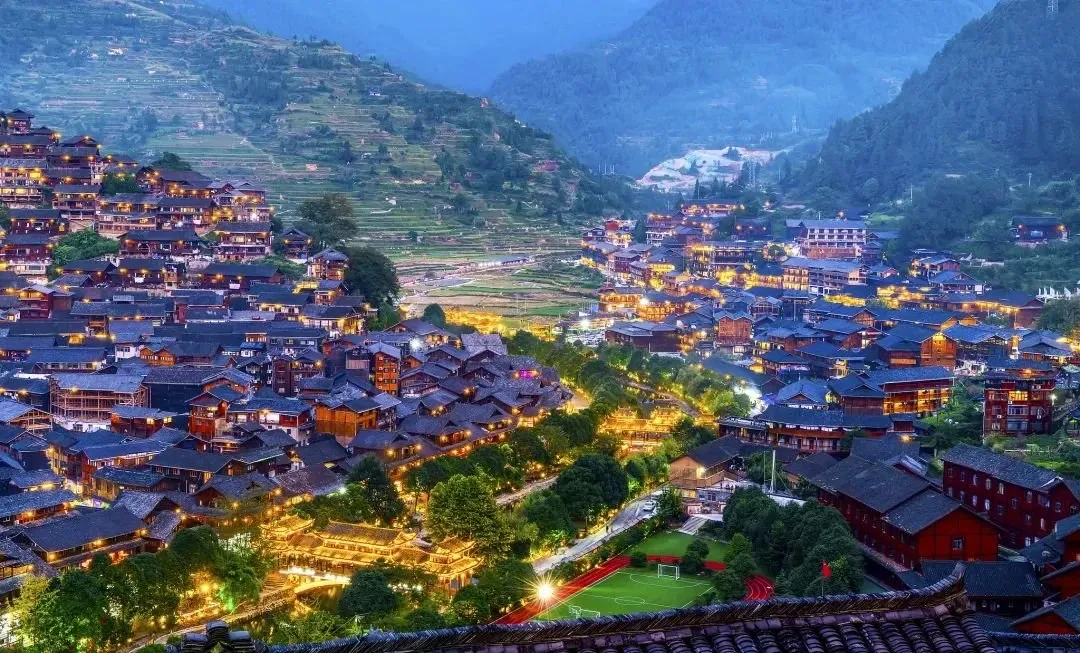
If the real goal is to spend a comfortable summer week somewhere rather than produce a new photo grid every day, Guiyang, Liupanshui, Xingyi and even Weining become more interesting.
Outdoor travelers get another map entirely. Grasslands, caves, canyons, streams, ridgelines and higher plateaus often sit outside the conventional group-tour circuit. When I now evaluate a Guizhou route, I care less about whether it looks spectacular in a photo and more about access, weather, road conditions, water and food, and how easy it is to turn back if conditions deteriorate. I explain that approach in How I judge lesser-known Guizhou outdoor routes.
Fanjing Mountain, Wumeng Grassland and the world’s highest bridge are not the same kind of trip
Put several well-known Guizhou names beside one another and the weakness of a “Top 10 must-see” list becomes obvious. Fanjing Mountain is a mountain-and-ecology experience. Xijiang is a village-and-culture experience. Wumeng Grassland is a high-altitude grassland and summer-escape experience. Wanfenglin is a slower landscape of peaks, fields and villages.
None of them has to win the same ranking.
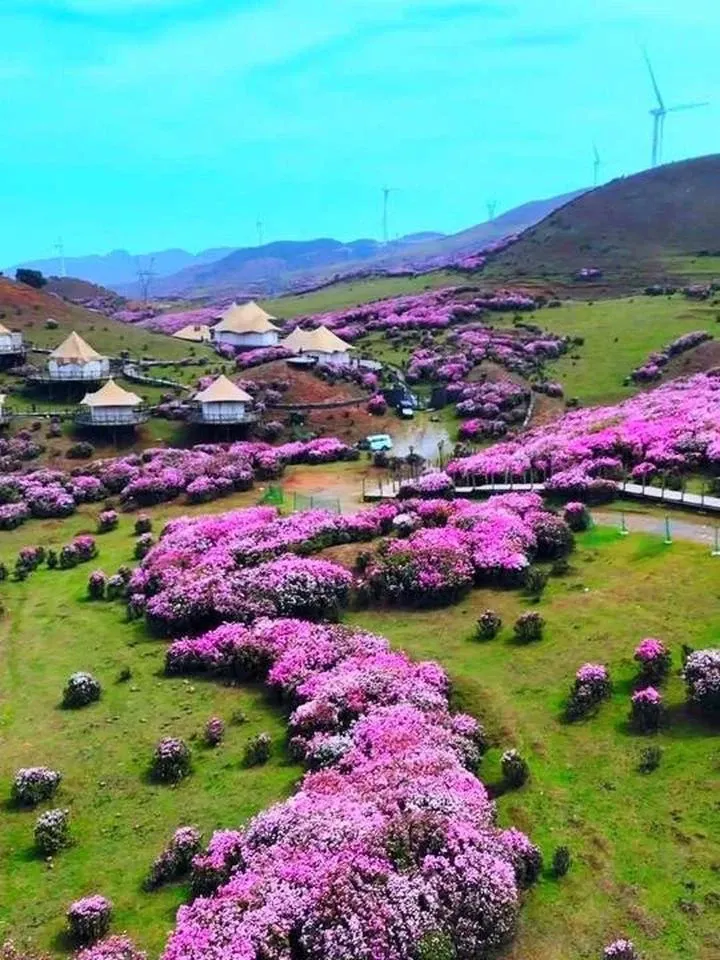
Around Liupanshui, Wumeng Grassland makes the contrast especially clear. Instead of waterfalls and turquoise water, the experience is built around highland grass, wind, cloud, rhododendrons and Yi culture. The scenic area lies around Wumeng Town and Pingdi Yi Ethnic Township in Panzhou, with elevations of roughly 2,000 to 2,857 meters.
Huajiang Canyon Bridge is different again. It is not a conventional attraction where the scenery existed first and tourism facilities were added later. The engineering structure itself is becoming the destination. Official Guizhou sources describe the bridge deck as about 625 meters above the water and the main span as 1,420 meters, and promote it as the world’s highest bridge. Observation areas, sports experiences and visitor services are part of the broader bridge-tourism concept.
During the 2026 Spring Festival period, the bridge-tourism service area recorded more than 40,000 visitors per day on two consecutive days.
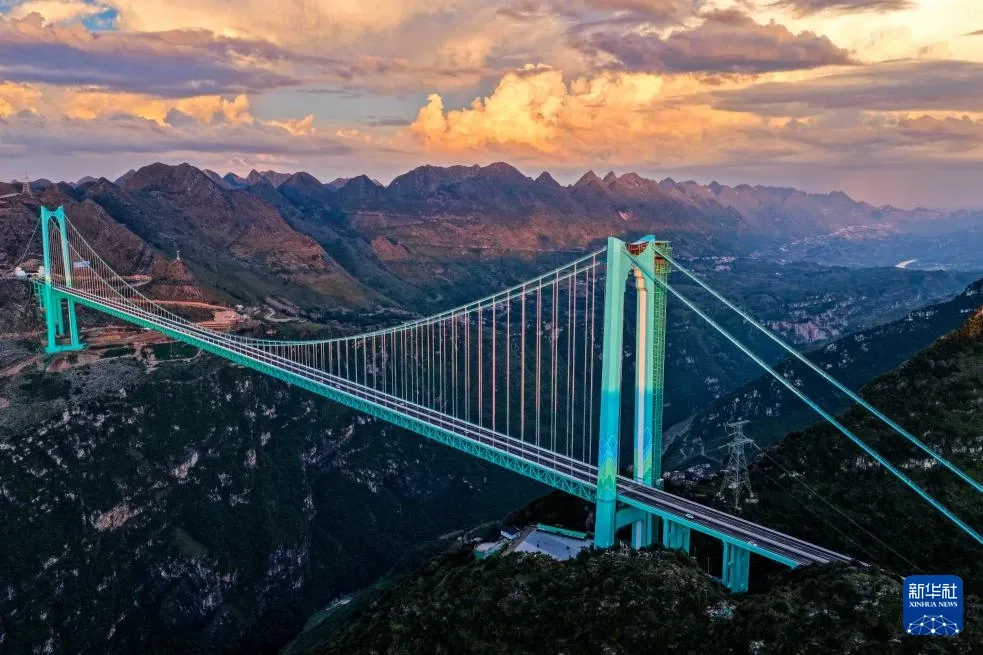
As someone who works in engineering, this interests me more than another temporary photo hotspot. One infrastructure asset can improve mobility, demonstrate engineering capability and then generate an entirely new reason for travelers to stop. Guizhou’s 2026 government work report explicitly continued the policy direction of integrating bridges with tourism.
The bridge also fits a more coherent western Guizhou route. Transport authorities have discussed travel connections that link Huangguoshu, Huajiang Canyon Bridge and Wanfenglin. That has a clearer theme than crossing the entire province in a week simply to collect Huangguoshu, Xiaoqikong, Xijiang and Fanjing Mountain.
That is why I do not like the idea of “Guizhou’s ten attractions everyone must visit.” The problem is not that the places are bad. The problem is the assumption that every visitor should want the same Guizhou.
A family traveling with parents and children should not use the same route sheet as someone who enjoys long hikes and accepts mountain roads. A traveler who wants a ten-day summer base should not make decisions using the same criteria as someone with one weekend.
The long-term story may be longer stays, not the next viral scenic area
The part of Guizhou tourism I find most interesting now is the push toward longer stays.
Traditional tourism is easy to measure through arrivals, tickets and hotel nights. Longer-stay travel changes the competition. Official planning has increasingly included products designed around two-week or longer stays, city living, rural stays, summer wellness and mountain sports.
Keeping someone for another week requires a different kind of destination quality. Markets, hospitals, transport, cafés, laundry, evening walks and bad-weather alternatives become relevant. That is why places such as Guiyang, Liupanshui and Xingyi may have more long-term travel value than a single spectacular attraction.
I reached a similar conclusion in my comparison of Guiyang, Liupanshui, Xingyi and Weining for summer travel. A temperature difference of a few degrees matters, but after ten days the practical questions become just as important: how far is the hospital, can you still eat late, what can you do on a rainy day, and do you need to drive two hours for every outing?
I do not want to write Guizhou as if it were one giant theme park
More tourism is generally good for Guizhou. Better transport, accommodation, infrastructure and services can benefit residents as well as visitors.
But the larger the traffic becomes, the less I want the province reduced to a fixed sequence of actions: hold up the phone at Huangguoshu, queue for the water at Xiaoqikong, wait for the lights at Xijiang, fight for a Fanjing Mountain reservation.
Guizhou is more complicated than that.
Sometimes it is a cool evening in Guiyang after rain. Sometimes it is realizing after several days in Xingyi that you no longer want to change hotels. Sometimes it is strong wind at Caohai in Weining and deciding that the better plan is to turn back and eat something hot. Sometimes it is simply driving out of Guiyang for the weekend to see grass, turbines and cloud on the plateau.
Those moments are difficult to package into a “Guizhou Top 10.” They are also closer to the Guizhou I understand.
That is part of why I want this material on XBSTACK. I will keep writing about AI, engineering, tools and technical problems, but I do not want a long-term personal archive to contain only code. Judging whether a technical solution is worth building and judging whether a mountain route is worth taking both require the same basic discipline: facts, cost, risk and a clear understanding of what you actually need.
If this is your first trip to Guizhou
I have one recommendation: do not use the trip to prove how many places you can complete.
Choose two or three versions of Guizhou that matter most to you.
Karst scenery, ethnic culture, summer weather, outdoor routes and city life can be mixed, but they do not all need to be maximized at once.
Guizhou’s travel demand is likely to remain strong as transport, longer-stay products and outdoor tourism continue to mature. But popularity does not create an obligation to visit every famous stop.
Skip one transfer and keep one afternoon free to change the plan. You may end up seeing more of Guizhou by trying to complete less of it.
Sources and further reading
- Guiyang Airport: record single-day passenger throughput during the 2026 summer travel period
- Ministry of Culture and Tourism: Guizhou’s four summer travel themes
- Guizhou Development and Reform Commission: provincial longer-stay tourism plan
- Xinhua: Guizhou climate-resource summer wellness areas
- Guizhou provincial government work report
- Guizhou Civil Affairs Department: Wumeng Grassland
- Guizhou Department of Transport: Huajiang Canyon Bridge opening briefing
- Guizhou Department of Transport: Spring Festival visitor traffic at Huajiang Canyon Bridge
Visitor traffic, scenic-area access, weather, transport schedules and reservation rules can change. This article focuses on how to think about a Guizhou trip; check official scenic-area notices, weather warnings and current transport information before departure.
Next step: continue with related field evidence
Full decision path →Follow the next route, condition, gear, or firsthand record that helps make a real decision.

DISCUSSION
Questions, verification and corrections
Sign in to comment. Every new comment is reviewed before publication; while pending, it is visible only to you and the administrator.